%20Sprockets.jpg)
Compact Track Loaders (CTLs), frequently referred to as skid steers or sometimes (incorrectly) posi-tracks, are the workhorses of the Australian earthmoving, civil construction, and landscaping industries. These powerful, versatile machines are essential for everything from removing fill and final trim work to mulching, sweeping, and site levelling.
In Australia, fleet owners and contractors rely on a wide variety of popular CTL models, including:
- Kubota: SVL75 and SVL95
- Bobcat: T-series machines such as the T190, T590, T870, and T76
- Caterpillar: 239 through to 299 models
- Case: TR270, among many others.
No matter what brand of machine you operate across Australia, keeping your undercarriage in peak condition is vital to maintaining project timelines and protecting your bottom line.
Why CTL Sprockets Matter to Your Bottom Line
The tracked undercarriage is the core reason why compact track loaders are so versatile on tough Australian terrains. Torque from the final drives is transferred directly through the sprockets, which engage with and rotate the rubber tracks to move your machine.
The critical connection between the sprocket and the rubber track is often overlooked, yet it plays a massive role in the lifespan of your components. Worn sprockets can significantly shorten rubber track life. Because replacing high-quality CTL tracks is one of the largest ongoing maintenance expenses for equipment owners, protecting them should be a top priority.
In extreme scenarios, failing to replace worn sprockets can cause severe damage to your final drives and track frame components. This leads to catastrophic failures that far exceed the cost of replacing a sprocket. Regular inspections are the easiest way to prevent this kind of costly, avoidable downtime.
Engineered Quality: Why Choose ITR CTL Sprockets
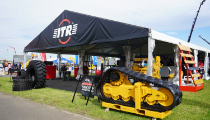
As Australia’s leading supplier of aftermarket undercarriage parts, ITR Pacific manufactures and distributes the nation's largest range of CTL sprockets and undercarriage components to suit almost every make and model.
Because ITR is a direct manufacturer, not just a third-party reseller, Australian customers benefit from:
- Consistent Engineering Quality: Strict quality control across every production batch.
- Total Design Control: Direct oversight of design, metallurgy, and induction hardness standards.
- Unmatched Value: High-tier parts with no middleman markup.
- Reliable Supply: Uniform product fitment and excellent stock availability nationwide.
Many imported or third-party sprockets available on the market come from factories with inconsistent materials and zero internal engineering oversight. With ITR Pacific, you receive the exact same OEM-matching quality every single time.
Third-Party Sprocket Hardness Test Results
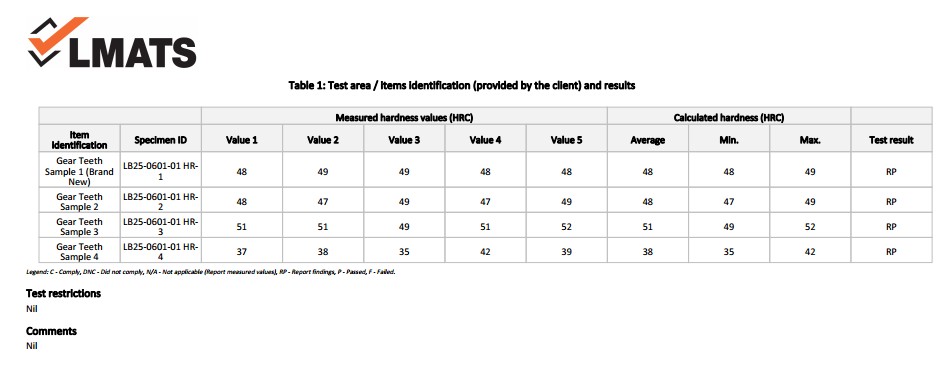
To prove our commitment to quality, an independent third-party test was conducted to compare surface hardness across four distinct sprockets:
- Sample 1: A brand-new OEM sprocket.
- Samples 2 & 3: ITR sprockets with approximately 200 operating hours.
- Sample 4: A fully worn-out sprocket.
The testing revealed no significant difference in hardness between the brand-new OEM sprocket and the ITR sprockets. Crucially, the worn sample highlighted the importance of timely maintenance: once the sprocket’s hardened surface layer wears through, the softer underlying steel wears away at an accelerated rate.
(Figure A- Comparison of sprocket surface hardness chart)
How to Check for Sprocket Wear: 2 Simple Methods
Regularly checking your drive sprockets ensures your machine stays productive. You can evaluate wear using either of these two methods:
Option 1: Refer to the Machine Maintenance Manual (e.g., Caterpillar)
- Measure: Use a caliper to measure a three-tooth section of the sprocket. Repeat this process at two other points on the sprocket.
- Calculate: Take the average of these three measurements.
- Compare: Check your average against the wear limits specified in your manufacturer’s maintenance manual.
For Caterpillar machines, for example, these exact limits will indicate whether you should:
- Swap the sprockets from one side of the machine to the other to balance out wear, or
- Replace the sprockets entirely.
Option 2: Visual Inspection (What to Look For)
You can often spot an over-worn sprocket just by looking at the tooth profile. Check your machine for these two warning signs:
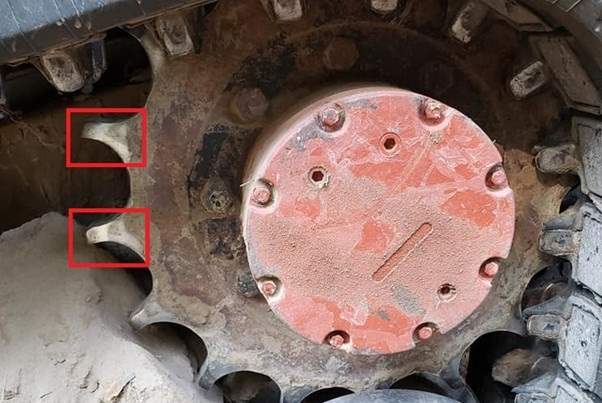
- Hooked Teeth: Teeth that have lost their rounded, symmetrical profile and are curving in one direction (typically forward). If your sprocket teeth look like hooks, replace them immediately to prevent severe track damage.
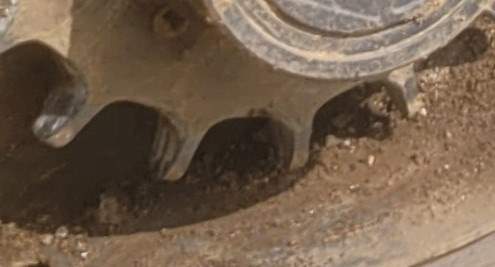
- Square-Sided Teeth: When the root (valley) between the teeth becomes flat and square instead of a smooth, triangular slope, the sprocket has worn completely through its hardened layer. At this stage, the sprocket must be replaced at once to avoid damaging your rubber tracks, final drives, and frame components.
(Example - Hooked teeth visual reference)
(Example - Square-sided teeth visual reference)
Where to Buy ITR CTL Sprockets in Australia
With a truly national footprint, ITR Pacific ensures you can get the parts you need, when you need them. Our premium CTL sprockets are available through our dedicated branches nationwide, including:
- Queensland: Brisbane & Mackay
- New South Wales: Sydney
- Victoria: Melbourne
- Western Australia: Perth & Kalgoorlie
- South Australia: Adelaide
Our knowledgeable, earthmoving industry experts are standing by to help you find the perfect fitting part for your specific machine model.
Click here to browse ITR’s full range of CTL sprockets online.
Get a Quote Today
Call us on 1300 820 214 to speak directly with your nearest Australian branch, or visit itrpacific.com.au to submit an online enquiry.
Keep Your CTL Working Hard
Routine undercarriage inspections and timely sprocket replacements are the smartest ways to protect your rubber tracks and final drives from premature failure. Choose ITR CTL sprockets, engineered in-house, built to exacting standards, and trusted daily by Australian contractors who depend on their equipment to get the job done.

%20Sprockets.jpg)