There is nothing more frustrating (or fatiguing) than an excavator that refuses to walk a straight line. If you find yourself constantly correcting the steering or if your machine is "pulling" to the left or right, you are likely facing a loss of power in one of your excavator final drives.
However, before you pull the trigger on a new excavator travel motor, you need to determine if the fault lies in the drive itself, the hydraulic system, or simple maintenance neglect. Replacing a motor when the issue is a clogged swivel joint is a costly mistake.
Follow this 5-step diagnostic guide to isolate the fault.
1. The Easy Win: Check Your Track Tension
Before opening the hydraulic system, look at the tracks. If one track is significantly looser than the other, it creates more rolling resistance. The machine will naturally pull toward the side with the loose track.
- The Test: Lift the machine using the blade and boom. Measure the sag between the middle roller and the track frame.
- The Fix: Adjust the grease tensioner to manufacturer specifications. If one side won't hold tension, you may have a failed seal in your track adjuster, not a final drive issue.
2. Swap the Case Drain Filters
If tension is fine, move to the hydraulics. Most final drives have a case drain line that returns excess oil to the tank. If the internal motor components are wearing down, they generate fine metallic debris.
- The Diagnostic: Inspect the case drain filters. If you find "gold dust" or silver flakes, the internal rotating group of that final drive motor is failing.
- Pro Tip: If one filter is clean and the other is clogged, you’ve found your culprit.
3. The Stall Test (Pressure Check)
Is the issue the final drive or the main hydraulic pump?
- The Test: Drive the machine against an immovable object (like a solid rock or a pile of dirt) and try to track forward.
- The Result: * If both tracks stall out and the engine lugs down, your pump is likely delivering pressure correctly.
- If one track spins while the other sits dead without making any "working" noise, the internal seals of that travel motor are likely bypassed.
4. Check the Swivel Joint (Center Joint)
The swivel joint allows hydraulic oil to flow from the fixed lower frame to the rotating upper house. If the internal seals in the swivel joint leak, pressure intended for the left track might be "bleeding" into the right line.
- The Diagnostic: If your machine tracks poorly in both forward and reverse on the same side, and your blade/ripper functions also seem sluggish, the swivel joint is a high-probability suspect.
5. Final Drive Gearbox vs. Hydraulic Motor
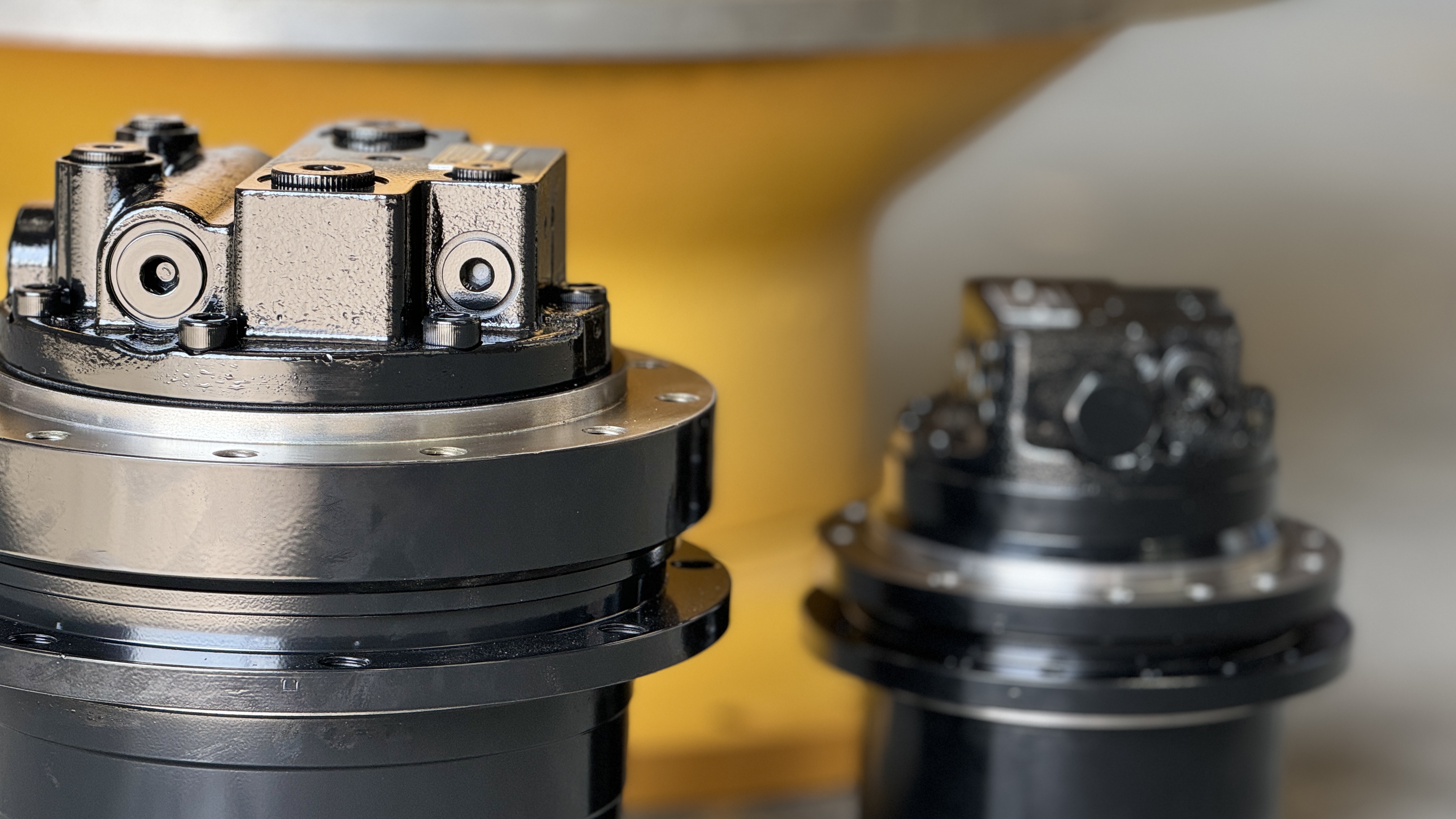
A final drive is two parts: a hydraulic motor (the power) and a planetary gearbox (the torque).
- Listen: If you hear a grinding or crunching sound, the planetary gears are likely shattered.
- Smell: Pull the oil plug on the gearbox side. If the oil smells burnt or looks like metallic soup, the gearbox has failed.
The Diagnostic Checklist: Step-by-Step Exclusion
|
Step |
Action |
Outcome |
|
1 |
Check Track Tension |
Rule out mechanical resistance. |
|
2 |
Check Case Drain |
Rule out internal motor bypass/wear. |
|
3 |
Swap Relief Valves |
If the problem "swaps" sides, it's a valve issue, not the motor. |
|
4 |
Check Travel Speed |
Does it only track wonky in "High Gear"? (Potential 2-speed valve fault). |
|
5 |
Oil Analysis |
Check gearbox oil for metal fragments. |
Don't Guess, Get Back to Work
Tracking issues are distress events. Every hour your excavator is pulling to the side, you are burning more fuel and wearing out your undercarriage unevenly.
At ITR Pacific, we stock a massive range of replacement excavator final drives and travel motors for all major brands, including CAT, Komatsu, Kubota, and Yanmar. If your diagnostic points to a failed motor, our team can help with a rapid replacement or a professional rebuild to OEM standards.
Need a technical second opinion?
Contact our Final Drive Specialists today or browse our products for immediate dispatch across Australia.

%20Sprockets.jpg)