In the Australian earthmoving industry, your rubber tracks are the only thing standing between a productive day and a bogged machine. Whether you’re navigating the clay-heavy soils of South East Queensland or the sandy coastal sites of WA, the standard track that came with your machine might not be the best tool for the job.
Choosing between a Block Pattern and a Multi-Bar Pattern is about more than aesthetics, it’s about balancing traction, vibration, and surface protection.
The Anatomy of Traction: Block vs. Multi-Bar
1. The Block Pattern (The All-Rounder)
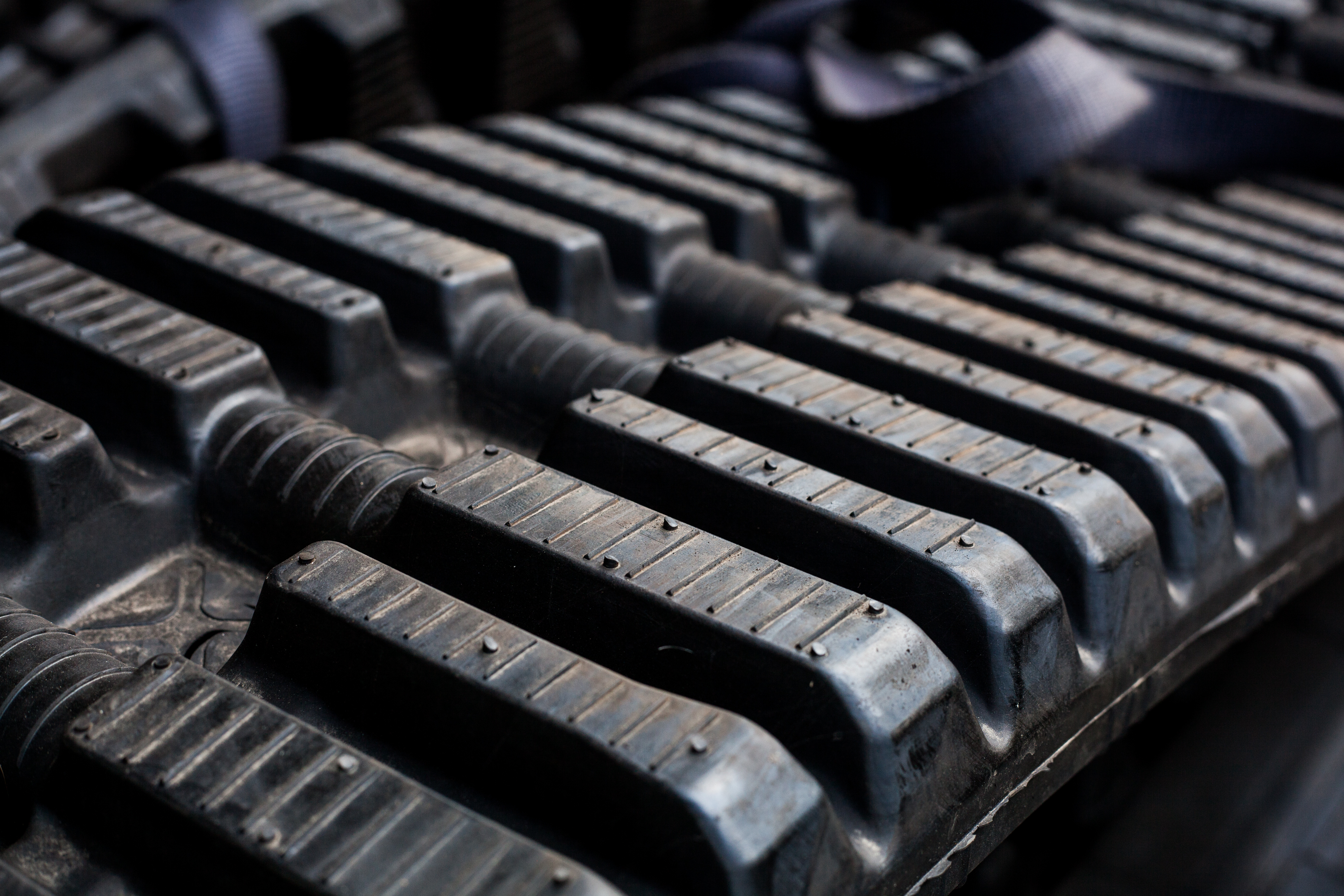
The Block Pattern (often referred to as the "Staggered Block") is the industry standard for a reason. It features individual rectangular or "Z" shaped lugs spaced apart.
- Best For: Mud, clay, and loose dirt.
- The Science: The gaps between the blocks allow the track to self-clean. As the track rotates over the sprocket, the mud is squeezed out, preventing the track from becoming a smooth, slippery surface.
- The Downside: On hard surfaces like bitumen or concrete, block patterns can produce more chatter or vibration, which increases operator fatigue and wear on the mini undercarriage components.
2. The Multi-Bar Pattern (The Precision Performer)
The Multi-Bar pattern features closely spaced, continuous horizontal ribs. This creates a much higher number of biting edges per foot of track.
- Best For: Sand, wet grass, turf, and steep slopes.
- The Science: Because the bars are narrower, they "bite" into slippery surfaces like wet grass without churning up the ground. They also provide a much smoother ride on hard surfaces because there is always a constant point of contact with the ground.
- The Downside: They struggle in heavy, sticky mud. Without the large gaps found in block tracks, the mud can pack in, effectively turning your track into a slick racing tire.
Terrain vs. Tread: The Selection Matrix
Before you order your next set of excavator rubber tracks, use this quick reference guide to match your tread to your typical job site.
|
Terrain Type |
Recommended Pattern |
Key Reason |
|
Heavy Mud / Clay |
Block Pattern |
Superior self-cleaning properties. |
|
Sand / Loose Dry Soil |
Multi-Bar |
Maximum "floatation" to prevent digging in. |
|
Wet Grass / Turf |
Multi-Bar |
High traction with minimal ground disturbance. |
|
General Construction |
Block Pattern |
Versatility across mixed debris and dirt. |
|
Rock / Demolition |
Heavy Duty Block |
Larger lugs resist tearing and chunking. |
|
Hard Scape / Pavement |
Multi-Bar |
Low vibration for operator comfort. |
Wet Season Maintenance: Don't Let the Slide Start
In Australia, the wet season can turn a profitable site into a liability overnight. If you are running worn tracks, no pattern will save you.
- Check Tension: Mud adds weight and friction. Ensure your tracks are tensioned to manufacturer specifications to prevent de-tracking in heavy slush.
- Clean the Undercarriage: Even the best self-cleaning block pattern can fail if the rollers and idlers are packed with dried clay.
- Inspect for "Smoothing": If your block lugs are worn down to less than 30% of their original height, your "bite" is gone.
The ITR Advantage
At ITR Pacific, we don't just sell "rubber." We provide engineered traction solutions. Our Rubber Tracks category features high-tensile internal steel cables and specialised rubber compounds designed to withstand the high-UV and high-heat environments of the Australian outback.
Whether you need the aggressive grip of a block pattern for a muddy civil site or the smooth, turf-friendly glide of a multi-bar for landscaping, we hold the largest local stock to keep you moving.
Is your machine losing its grip?
Browse our full range of Rubber Tracks here or contact your local ITR Pacific branch in Brisbane, Sydney, Perth, or Melbourne for an expert fitment consultation.

%20Sprockets.jpg)